![]() |
||||||||||||||||||||||||||||||||
|
|
History of Diamonds
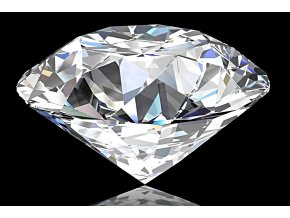
Diamonds are made up of carbon that was buried deep within the Earth under intense pressure and heat. Their initial popularity derived from the fact that they are the hardest substance known to man. They will not easily break, crack or chip, though can be cut by a single blow. India was the first to mine diamonds for jewelry over a thousand years ago and they were soon sought out across the globe. Today, 90 percent of diamond jewelry is made from diamonds mined in African countries, with the remaining 10 percent mined primarily in Australia, South America, Canada and Russia. White diamonds are most commonly used in jewelry, yet diamonds come in a rainbow of colors and can have a hue as brilliant as any other gem. Different tints occur when there are traces of elements present other than carbon. The particular type of element inclusion determines the color. Pink and blue diamonds are especially popular and have been sold at a higher price per carat than any other recorded gemstone. Red, green, and purple diamonds are extremely rare. Diamonds have traditionally been set in the center of engagement rings. Many attribute this standard to what they consider the first diamond engagement ring given by Archduke Maximilian of Austria to Mary of Burgundy in 1477. Now, more than 250 tons of earth are mined before a single 1-carat quality diamond is discovered. Although many substitutes exist, such as the popular and affordable cubic zirconium, out of this world moissanites, and rare white sapphires, real, genuine diamonds are still the most valuable and desired. Diamonds possess a beauty and rarity that will be adored and regarded as the premium choice for countless years to come. ![]() ![]() ![]()
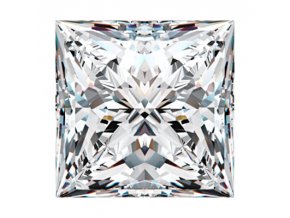
The Four C's There are four C's that should be taken into account when making a loose diamond purchase; carat, clarity, color and cut. It is very important that a buyer be educated before making a purchase. Having familiarity with the four C's will allow the purchaser to get the best possible diamond for their money. It is also important to determine which diamond characteristics are most valued by the individual. Prioritizing carat, clarity, color and cut can potentially assist the buyer when deciding between a larger or clearer stone. Brief definition of each: Diamond Carat - Refers to the diamond's weight. Diamond Clarity - Measures the amount of inclusions. Inclusions interfere with light's ability to pass through, therefore lowering the brilliance and fire. Diamond Color Grading - Evaluates the whiteness of loose diamonds - the more white (free from yellow hues) the more valuable. Diamond Cut - Measures the quality, not shape of the diamond. A better cut results in more sparkle. Carat Weight of a Diamond All loose diamonds are measured by carat weight. Generally, the average consumer associates size with value. However, larger diamonds often suffer in quality, such as a loss in brilliance. In order to achieve the most "fire," a stone must be cut at the most complimentary angles and therefore much of the original diamond rough is sacrificed. The trade-off to a perfectly cut diamond is a significant decrease in carat weight. One carat is equivalent to 1/5 of a gram and a carat is attributed 100 points. When a diamond is referred to as .25 points, it is not equal to one quarter of a carat. A diamond this small should only be used as an accent to a larger stone or other specific piece of jewelry. Due to the extraordinary nature of large diamonds verses smaller stones, value increases exponentially with carat weight. A one carat diamond is worth more than several diamonds that measure one carat in total weight. Diamond Clarity Clarity refers to the purity of a diamond. A diamond that is clear and clean of any imperfections is an extremely rare find. When buying diamond jewelry, try to weigh the importance of clarity with your allocated budget in order to obtain the most pure diamond for your money. Inclusions can sometimes be minor and unnoticed by the naked eye. When looking at clarity, we recommend going with a diamond that is Flawless (IF) to Very Slightly Included (VS2). To the naked eye, these appear to be clear. There are currently two Clarity grading scales done by the American Gem Society Laboratories (AGSL) and Gemological Institute of America (GIA). 1.) American Gem Society Laboratories (AGSL): The AGSL scale is from 0 to 10, 0 being flawless. 2.) GIA Clarity Scale: The GIA scale grades diamonds from Flawless to Imperfect (FL to I3). Flawless (FL) and Internally Flawless (IF): Diamond is virtually flawless with no natural inclusions seen under 10x magnification. These diamonds are extremely rare. Very Very Slightly Included (VVS1 and VVS2): Diamond has inclusions that are difficult to see under 10x magnification. Imperfections are only visible from the pavilion. Small and shallow inclusions can sometimes be removed with minor polishing. Very Slightly Included (VS1 and VS2): Diamond has inclusions that are difficult to see with the naked eye. They are of lesser quality and therefore less expensive than VVS1 and VVS2. Inclusions in VS1 are still difficult to see and only slightly easier to notice in VS2 diamonds. Slightly Included (SI1 and SI2): Diamond has inclusions that are visible under 10x magnification and may be seen with the naked eye. Many consider these a good value because their brilliance is still relatively high while their cost is more affordable. Imperfect (I1, I2 and I3): Diamond contains inclusions that are obvious under 10x magnification and can easily been seen under the naked eye. Diamonds included in this category have significantly less of a sparkle to the naked eye. Diamond Color Loose diamonds come in varying colors from yellow to light brown. Extraordinary colors, such as pink and black, are considered rare and excluded from the color scale. A colorless diamond is extremely rare and viewed as the highest grading on the scale. Letter grades ranging from D to Z are issued to diamonds according to the generally accepted grading method. White Diamond Color Scale: · D is colorless and extremely rare. · E is colorless with trace color only uncovered by an expert gemologist. · F is colorless with slightly more trace amounts of color than E, but still only detected by an expert gemologist. · G-H is near colorless and still of good standing. · I-J color is slightly detected. · K-Z loose diamonds that have a faint yellow to light yellow color. When purchasing diamonds for value, it is recommended that the individual looks at grading values between "G" and "I". When quality is of more importance (i.e. for an engagement ring) it is recommended that values between "D" and "H" are considered. Fluorescence occurs when a loose diamond is exposed to ultraviolet light. This causes the diamond to emit a soft colored glow that will not be seen with natural light. Diamond Cut Loose diamonds are commonly found in the following shapes; baguette, emerald, heart, marquise, oval, pear, princess, radiant, round and trillion. ![]() ![]() ![]() ![]() ![]() ![]() ![]() A "round brilliant" shape is often regarded as the perfect cut because many believe it to display the maximum brilliance and sparkle in a diamond. The design also allows it to hide flaws and imperfections. However, recent technological advances have improved methods of cutting diamonds, allowing other shapes to appear just as brilliant, such as the princess cut and trillion cut. Today, there is no such thing as an "ideal cut" when it comes to diamond jewelry. Unusual diamond shapes such as heart diamond, trilliant diamond, pear diamond, marquise, oval, and princess diamond are all designed to maximize the carat weight. Depending on the shape of the rough diamond, the stone will be cut in a way to sacrifice the least amount and retain the greatest possible carat weight. Marquise and oval shapes should have a length that's exactly twice the size of the width. Any inconsistency to this rule, whether too wide or too narrow, will result in the stone losing light and appearing too dark. General speaking, loose diamonds will look fantastic regardless of the chosen shape, as long as the quality and the cut of the stone are good. DEAR CUSTOMERS, PAGES ARE UNDER CONSTRUCTION NOW. FOR MORE INFORMATION, PLEASE CONTACT US BY e-mail. |
|||||||||||||||||||||||||||||||
| | ||||||||||||||||||||||||||||||||
| | ||||||||||||||||||||||||||||||||
| | ||||||||||||||||||||||||||||||||
| | ||||||||||||||||||||||||||||||||
| | ||||||||||||||||||||||||||||||||
| | ||||||||||||||||||||||||||||||||
| | ||||||||||||||||||||||||||||||||
| SIGN HERE | ||||||||||||||||||||||||||||||||
![]() | ||||||||||||||||||||||||||||||||